
From Evidence Map to Review Outline
How to convert complex data clusters, method matrices, and citation maps into a compelling, logically structured literature review outline.
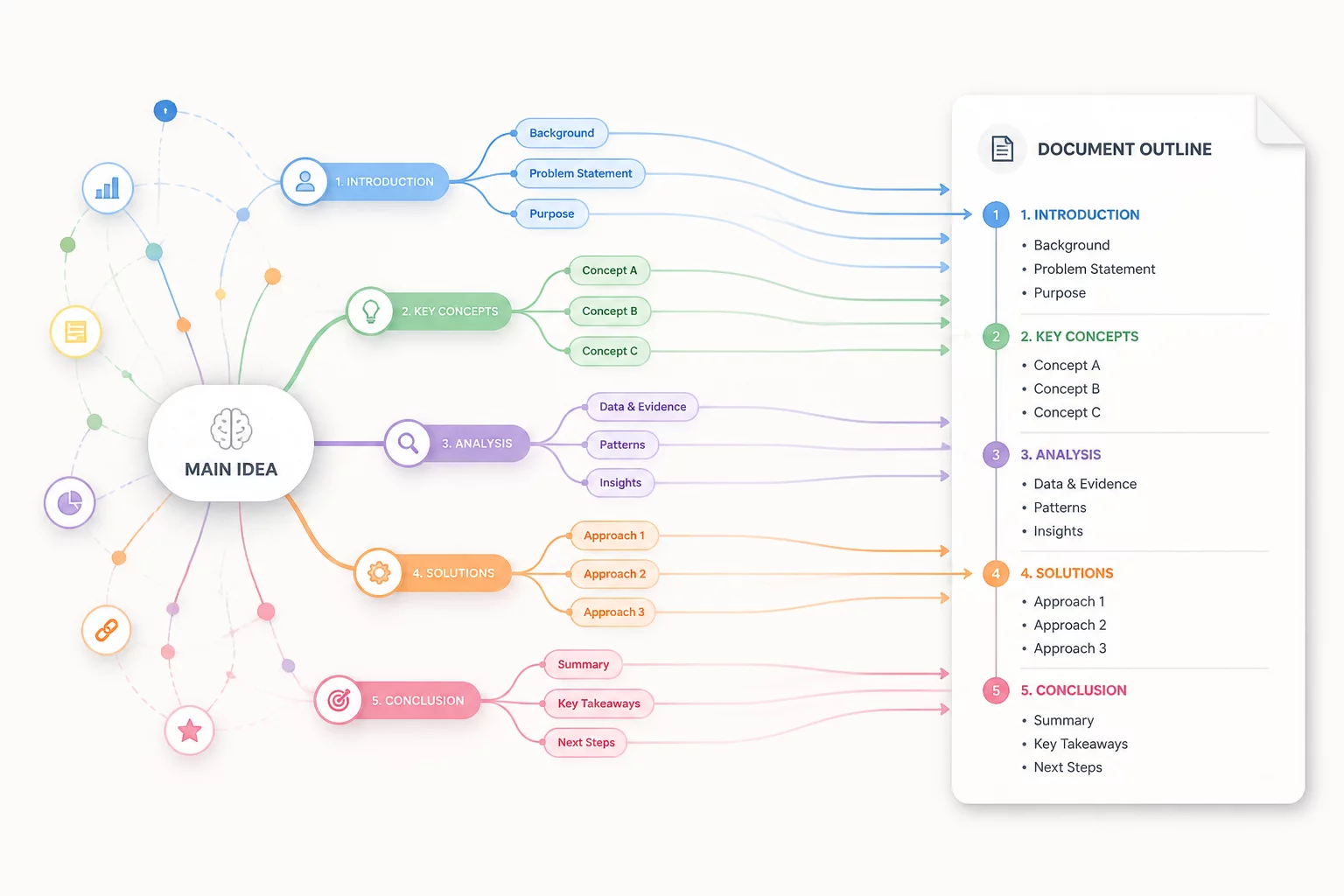
Systematic translation of multi-dimensional evidence matrices into structured linear review sections.
Bridging the gap between an exhaustive evidence map and a cohesive narrative review is often where synthesis stalls. Here is how to translate matrix rows into coherent headings, thematic transitions, and rigorous scholarly arguments.
Extracting Core Thematic Clusters from Your Matrix
An evidence map organizes disparate literature along analytical dimensions such as methodology, target demographic, and primary outcome metrics. Turning these tabular findings into prose requires identifying thematic clusters rather than summarizing papers sequentially. Group papers that address overlapping theoretical tensions or test comparable intervention mechanisms.
- Group studies by shared analytical frameworks and empirical scope.
- Contrast divergent findings across uniform populations to establish critical debates.
- Isolate peripheral studies into specialized sub-sections addressing boundary conditions.
Structuring the Narrative Hierarchy and Section Transitions
A literature review fails when it reads like an annotated bibliography. Convert matrix rows into overarching thematic arguments. Start with broad macro-level findings before drilling down into granular methodological divergences. This top-down hierarchy provides clear navigational cues for the reader while preserving empirical rigor.
Methodological Tip: Avoid Chronological Summaries
Chronological ordering obscures conceptual connections. Structure your review outline around conceptual weight, conflicting paradigms, and unresolved empirical questions identified during evidence mapping.
Synthesizing Evidence Gaps into Actionable Review Sections
The empty cells in your evidence map represent the critical frontiers of your field. Dedicate explicit subsections of your outline to these blind spots. By pairing demonstrated consensus against observed evidence gaps, your review moves beyond descriptive reporting into valuable theoretical contributions.
Interactive Synthesis Tools
Evidence Categorization Workflow
Structure studies into multi-attribute records detailing population parameters, research design boundaries, outcome metrics, and statistical effect size notations.
View Workbook Instructions →Peer Commentary & Review
Scholarly discourse and methodological notes
Dr. Claire Dubois
[Oxford Institute]Published 08/20/2026 • Node #382
The literature matrix structure provided in Module 4 substantially accelerates thematic categorization. The cross-referencing schema resolved methodological ambiguities across our secondary quantitative datasets with minimal synthesis friction.