
When Similar Titles Hide Different Populations
Why identical research headings frequently obscure divergent demographic cohorts and sampling boundaries.
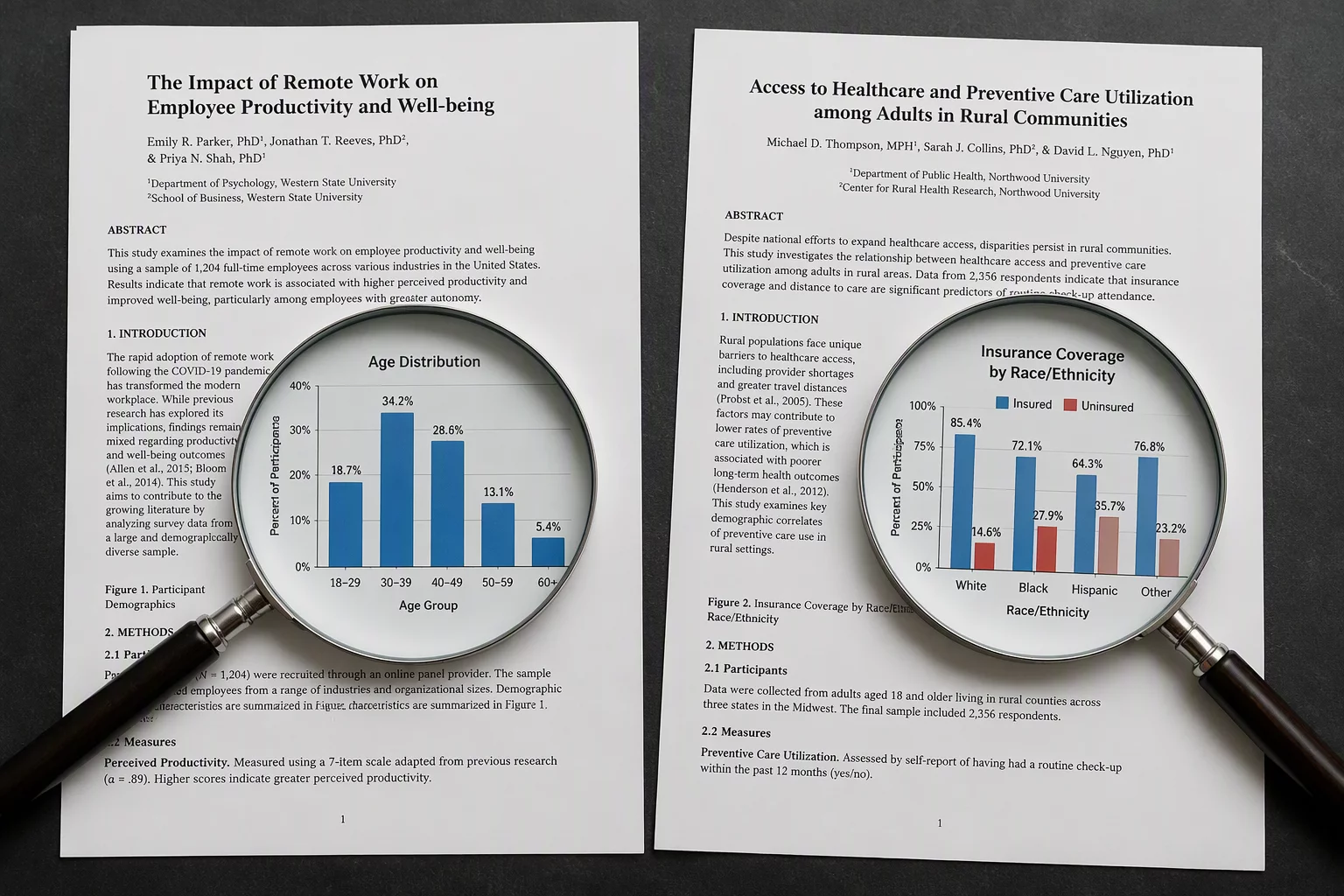
Comparative demographic analysis reveals distinct sub-populations concealed beneath matching research titles.
Two papers with nearly identical titles can evaluate entirely incomparable participant groups. Treating them as direct replications without examining inclusion criteria distorts synthesis outcomes and introduces substantial bias.
The Illusion of Nominal Equivalence in Literature Reviews
Researchers frequently group studies based on broad title keywords such as "workplace stress intervention" or "student cognitive performance." However, inspecting the participant profiles often reveals that one paper evaluated specialized clinical inpatients while another examined healthy university volunteers. Relying on titles alone produces superficial evidence maps that fail to account for underlying demographic disparities.
- Inspect explicit age brackets, baseline health status, and institutional recruitment sources across all retrieved papers.
- Differentiate general community samples from specialized clinical or high-risk cohorts.
- Record demographic covariates in your evidence matrix before comparing intervention effects.
Methodological Friction and Statistical Skew
Pooling divergent sample cohorts without distinction inflates statistical heterogeneity and muddles meta-analytic conclusions. An intervention showing substantial gains in a tightly monitored clinic may yield zero measurable effect in a public school setting, even when both publications share matching keywords. Establishing explicit sample boundaries ensures that evidence synthesis reflects genuine operational conditions.
Extraction Rule
Never record a finding in your literature matrix without documenting the primary sampling frame. If titles align but participant groups diverge, create distinct sub-population codes in your reference manager.
Implementing Sub-Population Boundaries in EndNote
Effective evidence synthesis relies on organizing sources by participant characteristics alongside topical keywords. Create custom metadata fields in EndNote to record geographic origin, sample baseline characteristics, and eligibility criteria. This structured taxonomy ensures your synthesis produces valid, context-specific insights rather than overgeneralized claims.
Interactive Synthesis Tools
Evidence Categorization Workflow
Structure studies into multi-attribute records detailing population parameters, research design boundaries, outcome metrics, and statistical effect size notations.
View Workbook Instructions →Peer Commentary & Review
Scholarly discourse and methodological notes
Prof. Daniel Cho
[Oxford Institute]Published 08/18/2026 • Node #382
The literature matrix structure provided in Module 4 substantially accelerates thematic categorization. The cross-referencing schema resolved methodological ambiguities across our secondary quantitative datasets with minimal synthesis friction.